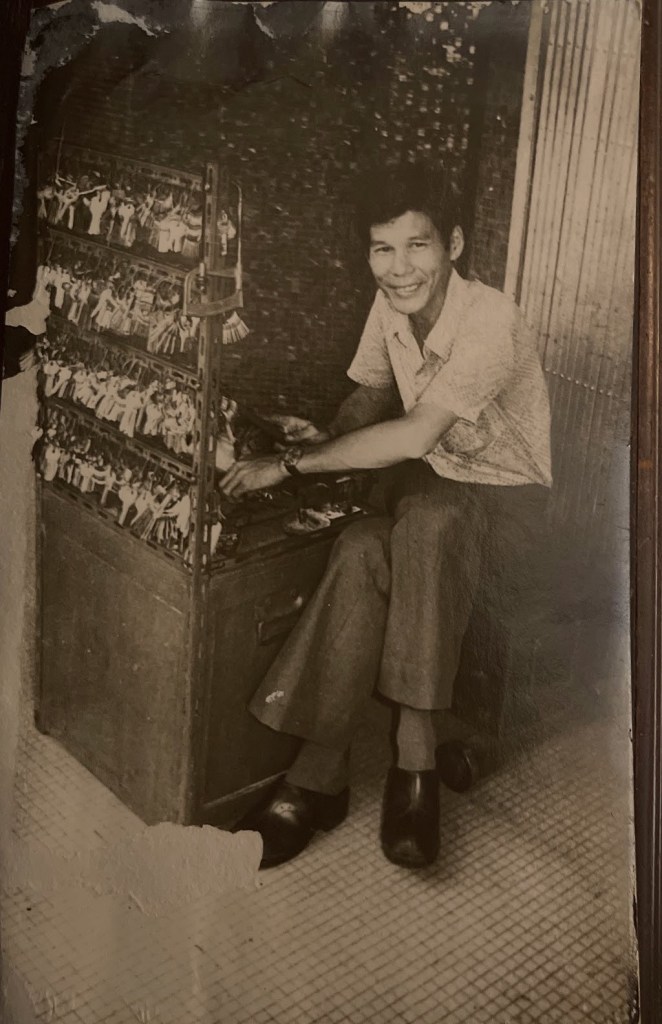
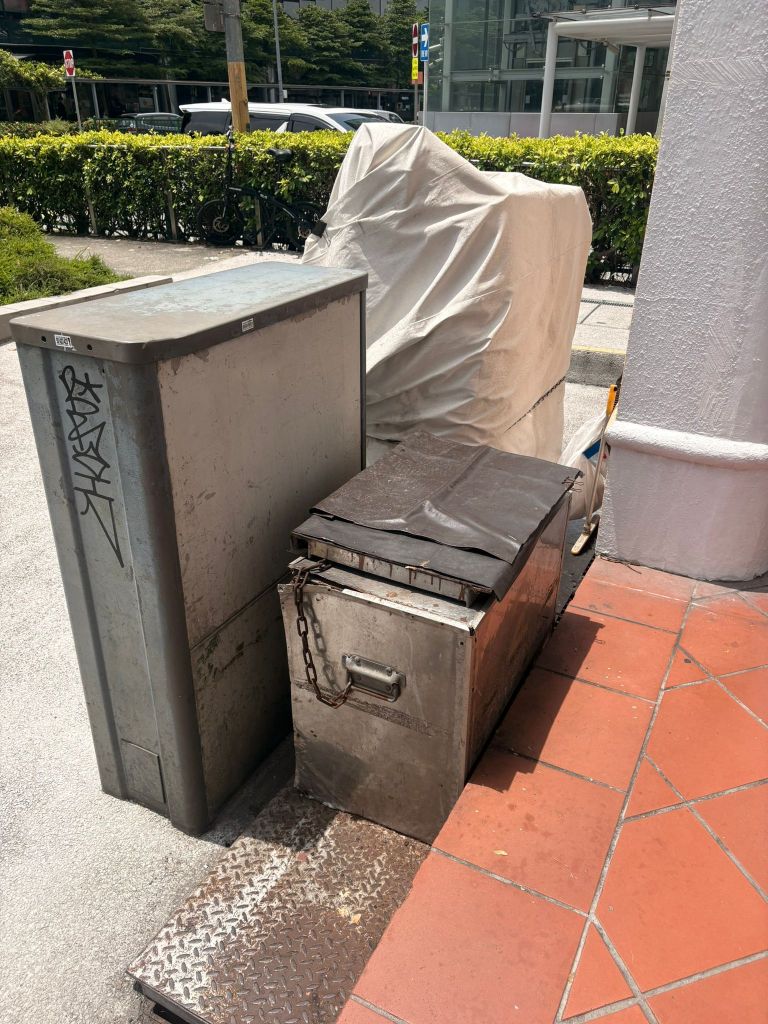
If you’ve walked through Holland Village recently, you may have seen a covered metal cart chained beside a utility box.
Most people pass it without a second thought.
But to me, it was the cart my father used when he first set up his locksmith store there decades ago.
Cities remember buildings. They rarely remember the hands that kept them working.
Story Behind the Object
The chained metal cart represents the life and work of my late father, who was a self-taught locksmith in Holland Village during the 1960s and the decades that followed. At a time when formal training opportunities were limited, he learned the trade through observation, practice, and persistence. Locksmithing required patience, precision, and a strong sense of responsibility, as people trusted him with the security of their homes and shops.
He endured significant hardship while building his livelihood. As the sole breadwinner, he supported a family of seven — his elderly mother, his wife, and three children — while also helping his younger brother learn the locksmith trade so that he, too, could earn a living. His stall, represented by the metal cart, was not only a workplace but also the foundation of our family’s survival and stability.
During those years, Holland Village was very different from today. It was quieter, more village-like, and relied heavily on small tradespeople who provided essential services to the community. My father’s cart stood along the roadside, chained in place each day, holding his tools, key blanks, and equipment. From this modest setup, he served residents, shopkeepers, and passers-by, often working long hours in heat and rain.
The cart symbolizes more than just a business. It reflects a generation of immigrants and working-class Singaporeans who built their lives through manual skills and determination rather than formal education. Their contributions were rarely recorded, yet they played an important role in supporting the growth of neighbourhood economies during Singapore’s early development years.
For me, this object is a reminder of resilience, sacrifice, and the dignity of honest work. It represents how one individual’s perseverance helped raise a family, pass down skills to the next generation, and quietly contribute to the functioning of a growing nation.
Remembering Quiet Lives During Qing Ming
It is Qing Ming Festival again — a time each year when families return to the resting places of those who came before them. This year, like every year, I made my trip to Fung Yun Thai Association Columbarium, near Old Holland Road, where my grandparents’ and father’s urns are kept.
The columbarium is also closely linked to the early Hakka community, commonly known as Hakka people (客家人). Long before Holland Village became the lively lifestyle destination it is today, generations of Hakka immigrants lived, worked, and built their lives in this area. Walking through the grounds, I am always reminded that the modern city rests on the quiet labor of people whose names are slowly fading from memory. (Reference here Old Holland Road and The Hakka Clan | Remember Singapore)
A Visit Across Three Generations
This year felt different because my daughter came with me. Having her by my side during this visit meant more than I expected. It turned what could have been a routine annual obligation into something deeper — a moment of continuity between generations.
As we walked through the columbarium together, I realized that she was not just accompanying me. She was witnessing a ritual that connects her to a family history she never personally experienced. Traditions like Qing Ming only remain alive if they are seen, practiced, and understood by the next generation.
Her presence made the visit feel less like remembrance and more like transmission.
Choosing Simplicity in Offerings
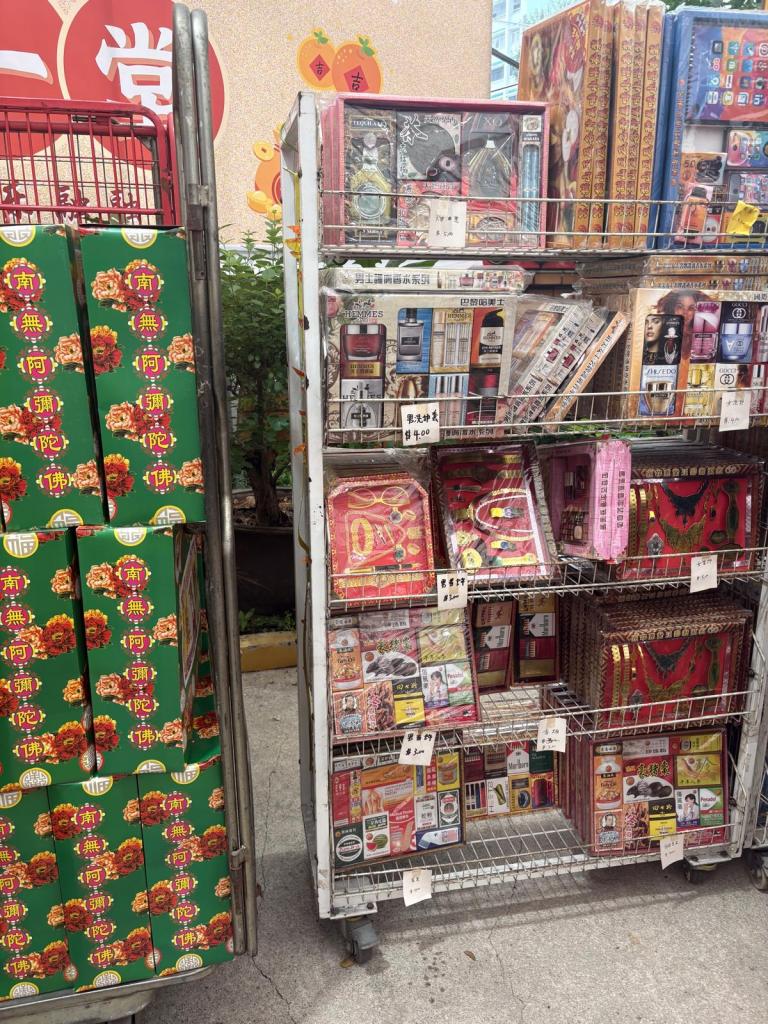
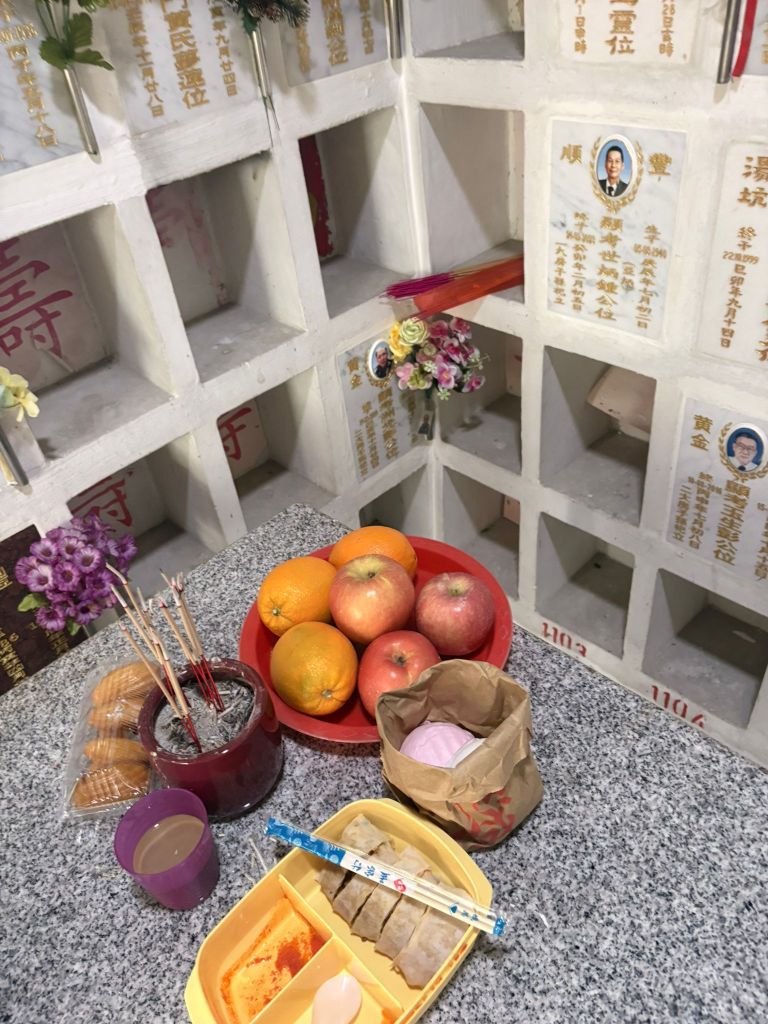
In the past, Qing Ming preparations often involved buying large quantities of offerings — food, incense, and paper items. This year, I chose a simpler approach. I purchased vegetarian food and a small, modest set of offerings from a nearby stall.
The stall owner shared a comment that stayed with me. He said that over time, people have been burning and consuming more and more items during Qing Ming — often far beyond what is necessary or meaningful. His words were simple, but they carried truth: sometimes rituals become excessive, and we forget the intention behind them. That conversation reinforced a belief I have been developing: remembrance does not require extravagance. Respect is not measured by quantity, but by sincerity.
A Buddhist Reflection on Paper Offerings
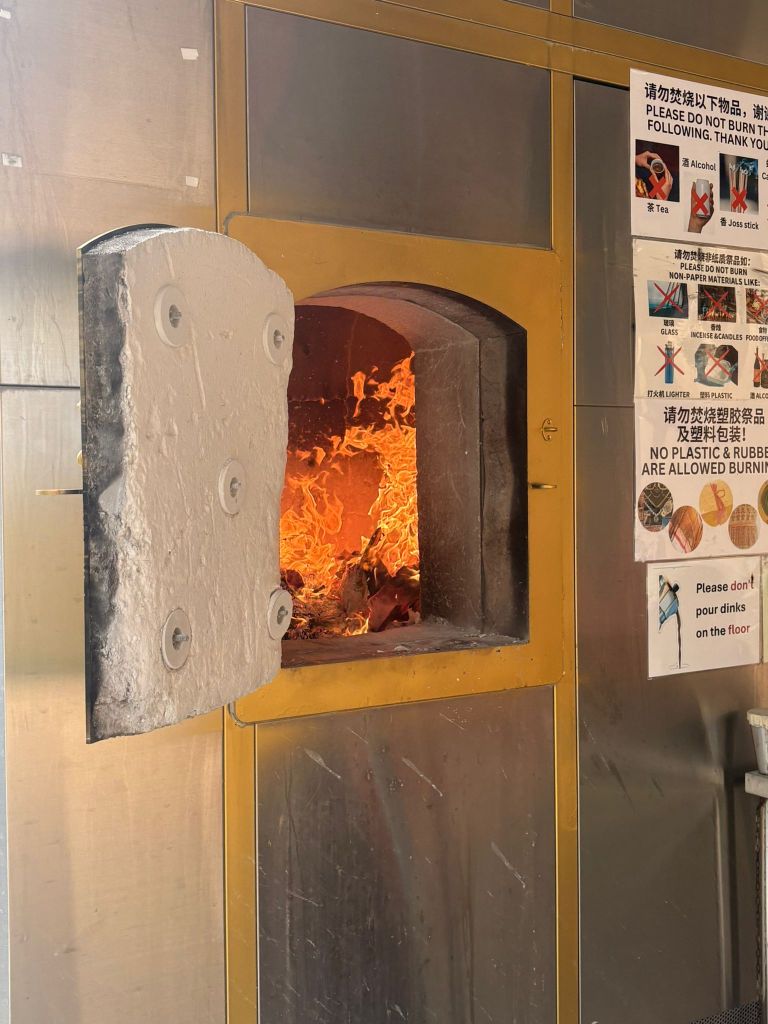
In fact, within Buddhist teachings — particularly in the Pure Land tradition — the burning of paper offerings is discouraged. It is believed that such practices may confuse the deceased into thinking that material items can still be obtained, which can create attachment and hinder their spiritual progress.
This perspective reframed my understanding of Qing Ming rituals. If remembrance is meant to support the deceased, then actions that reinforce attachment to material things may not truly benefit them.
Instead of burning paper items, focusing on sincere remembrance, prayers, and wholesome actions may be more meaningful and aligned with compassion. Is It Advisable For Buddhists To Burn Paper Offerings For The Deceased? 佛教徒该为亡者烧纸扎供品吗? – Purelanders
The Meaning of Remembering
Standing quietly in front of the niches, I realized that what matters most is not what we burn or display, but that we come back at all. Qing Ming is less about the objects we bring and more about the act of showing up — of taking time to pause in a fast-moving life and acknowledge those who shaped our existence.
In many ways, our ancestors lived lives that were highly visible in utility but invisible in history. They ran small businesses, worked long hours, and contributed to the communities around them. Yet, outside of family memory, little record remains of their efforts.
Visiting them each year is a small way of ensuring that their lives are not completely erased by time.
A Personal Resolution
As I left the columbarium with my daughter, I felt a quiet sense of clarity. Keeping things simple felt right. A short visit, modest offerings, and a moment of sincere remembrance carried more meaning than any elaborate ritual ever could.
In the years ahead, I intend to continue this approach:
- visit regularly,
- keep the rituals simple,
- and focus on remembering rather than performing tradition.
Because in the end, Qing Ming is not about what we burn or display. It is about acknowledging that our lives are built on the sacrifices and efforts of people who came before us — and making sure their stories are not forgotten.


Leave a Reply